The same composite principle, formed into a tube: a corrosion-resistant alloy bore inside a pressure-bearing carbon steel wall, fused atom to atom. The inside behaves like solid alloy. The outside is priced like carbon steel.
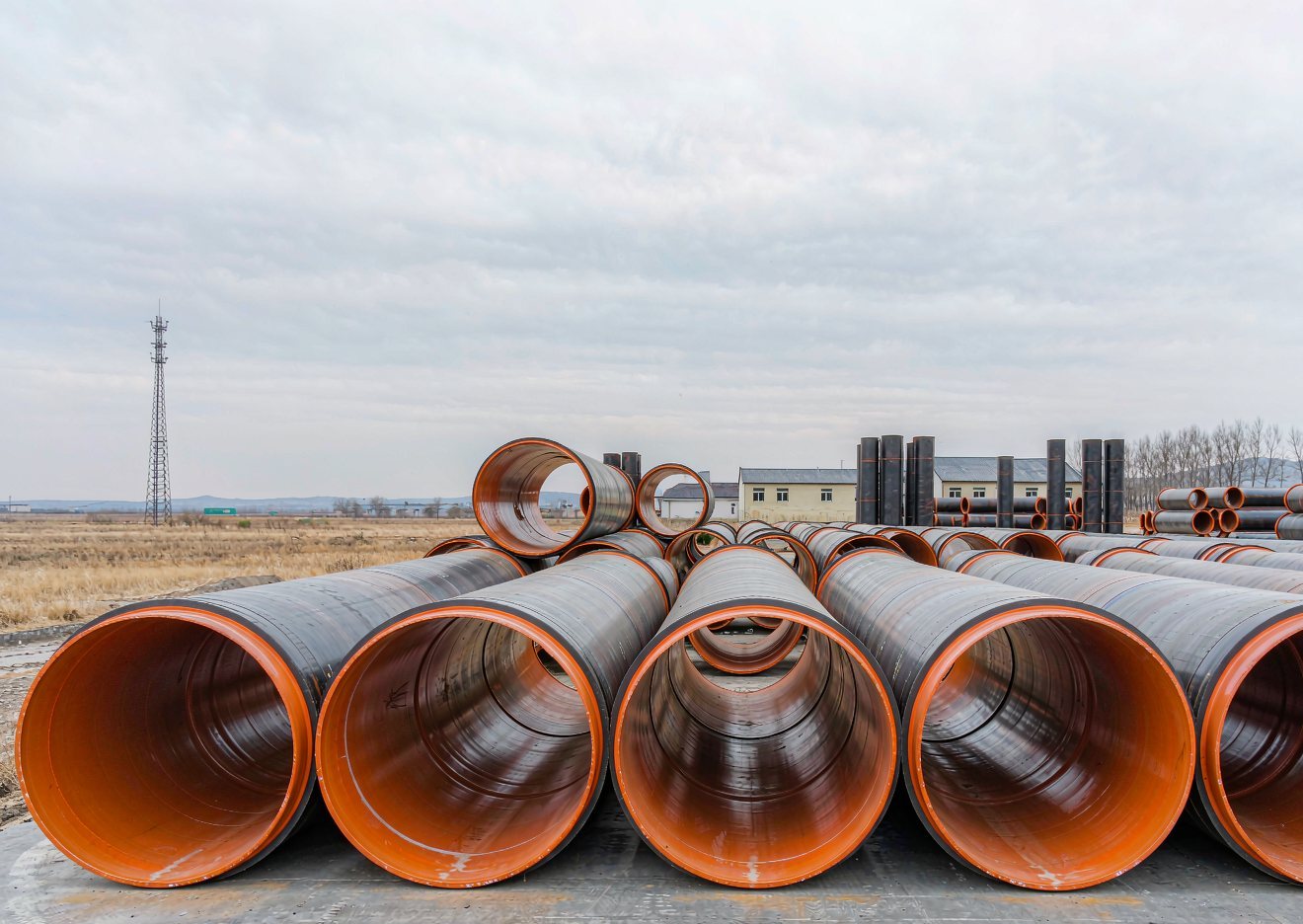 Clad pipe · OD 25–2,134 mm
Clad pipe starts from the same composite billet as our clad plate, then is formed and welded into a tube. Two metals are doing two clearly separate jobs.
Both products are sold as “clad pipe” in the market, but they are not interchangeable. If your line runs at high pressure, carries sour service, or will be bent and buried, the difference decides whether the liner is still in place in ten years.
| Metallurgically bonded | Mechanically bonded (lined) | |
|---|---|---|
| How it is made | Composite billet, hot rolled, then formed and welded — or explosive welding of a liner | Liner tube inserted and expanded hydraulically until it grips the carrier |
| Interface | Atom-to-atom fusion across the full contact area | Friction and interference fit only |
| Bond / shear strength | ≥210 MPa shear, against the 137.8 MPa floor of API 5LD | Friction only — no metallurgical shear value |
| Liner thickness | 1–6 mm, selected to suit the duty | 2–3 mm, limited by the expansion process |
| Counted in pressure design | Yes — the composite wall carries load as one | No — only the outer carrier is designed for pressure |
| Behaviour when bent | Bends and forms with the pipe, no separation | Risk of liner wrinkling, buckling and gap formation |
| Behaviour under thermal cycling | Stable — expansion is matched across the bond | Differential expansion can open the interface |
| Typical service | High pressure, sour service, offshore, subsea, deep wells | Medium and low pressure, onshore gathering and water lines |
| Relative cost | Higher | Lower |
We manufacture and supply both. If a mechanical liner is genuinely sufficient for your duty we will say so — there is no reason to pay for a metallurgical bond you will never stress.
A solid alloy line is the simple answer, and for short runs of small diameter it is often the right one. Beyond a certain size and length, clad pipe wins on every measure that matters to a project.
304 / 316L — general corrosion, food, water and dilute acids. · 2205 duplex — chlorides, seawater and brine. · 825 / 625 / C-276 — sour service, high temperature and aggressive acids. If you are unsure, send us the medium, the chloride level and the operating temperature and we will specify it for you.
A clad line is only as good as its weakest component. We supply matching clad pipe fittings made from the same composite, so the alloy bore runs unbroken from end to end and there is no carbon steel exposed to the medium at a joint.
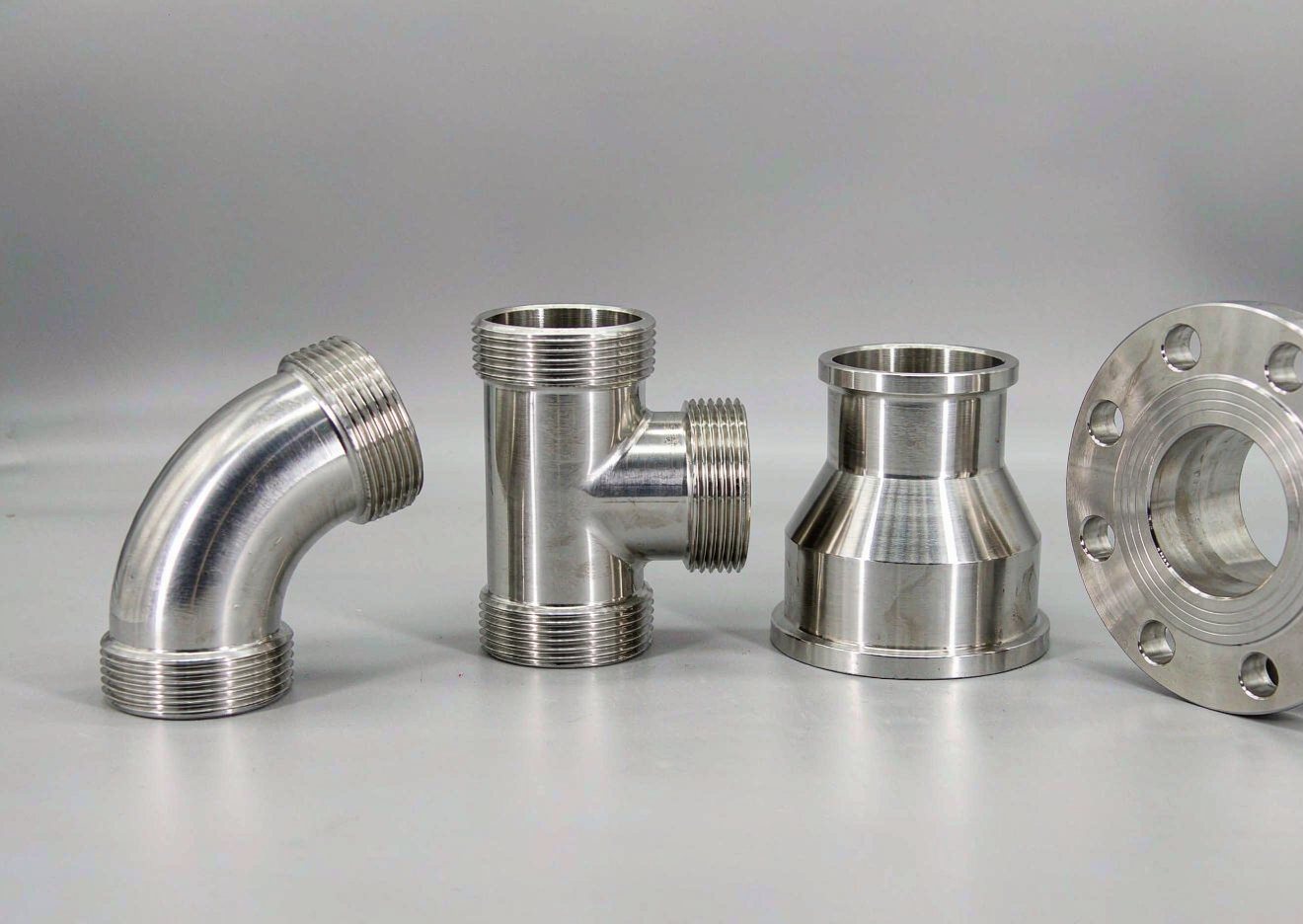 Elbows · tees · reducers · flanges
| Standard | Covers |
|---|---|
| API 5LD | CRA-clad or lined steel pipe — the key international specification; shear strength floor 137.8 MPa |
| GB/T 31940 | Bimetal composite pipe for fluid service — Chinese national standard |
| SY/T 6623 | CRA composite pipe for oil and gas gathering and transmission |
| ASTM A928 | Ferritic/austenitic stainless steel pipe with added filler metal, electric fusion welded |
| ASTM A790 / A789 | Duplex and super duplex stainless steel pipe |
| DNV-OS-F101 | Submarine pipeline systems — offshore and subsea projects |
| NACE MR0175 / ISO 15156 | Materials for sour service; hardness limits and heat treatment |
Dimensional ranges shown are the envelope we manufacture to. Confirm the exact combination with us before finalising your line class, and we will issue a material test certificate against the standard your project calls for.
Medium, chloride level, operating pressure, temperature and length — that is enough for us to specify the liner and come back with a price. Isometrics and material take-offs welcome.